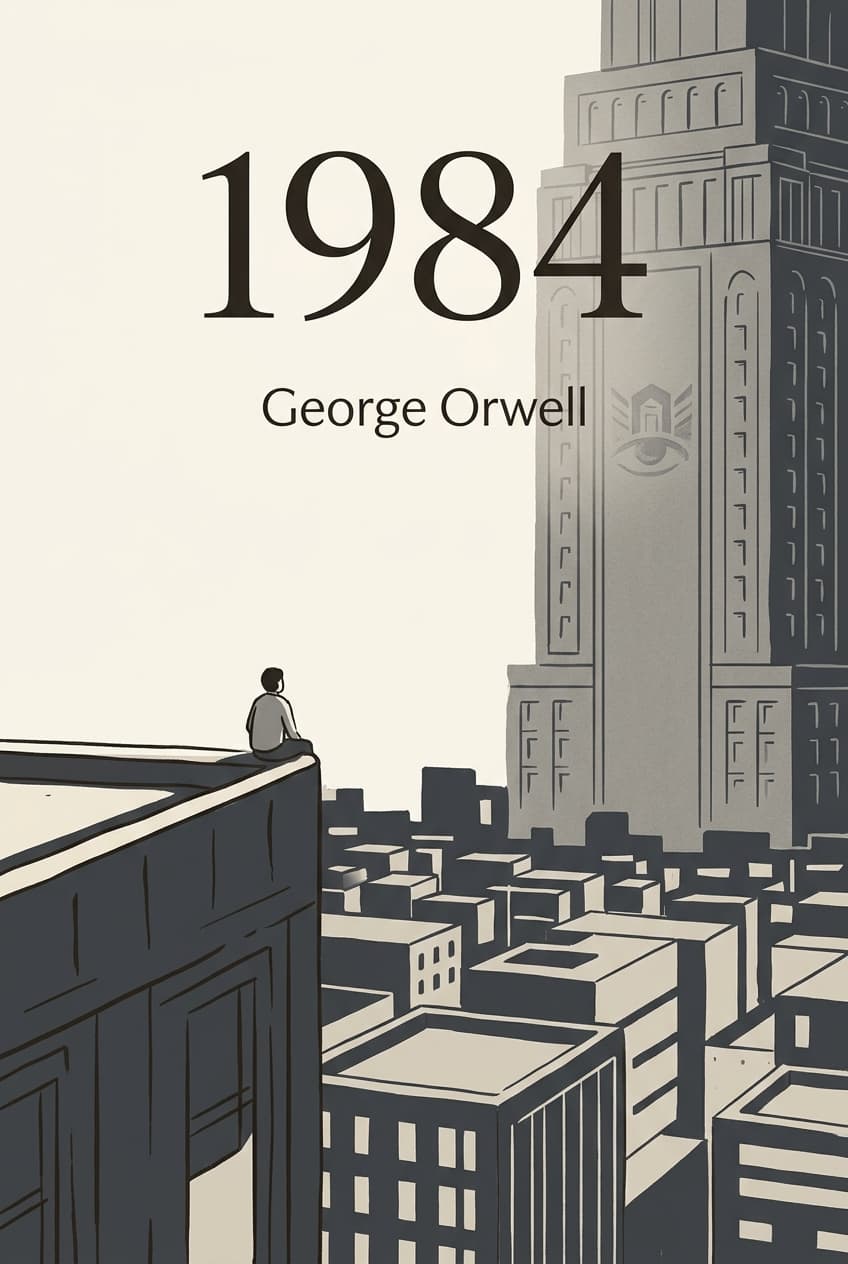
George Orwell · 1949 · Dystopian fiction
1984
A clerk keeps a forbidden diary in a world where the Party watches everything, even your thoughts. The defining novel of surveillance, propaganda, and the will to stay human.
14 guided chapters · ~11 hours of reading
What it’s really about
On its surface, 1984 is the story of Winston Smith, a minor Party functionary who quietly begins to hate the regime he serves and dares to keep a private diary. Underneath, it is an argument about power. The Party does not merely control behavior; it controls memory, evidence, and language, until the truth is whatever it says today. Orwell asks what is left of a person when the state owns the past, the future, and the words in your head, and whether love or fact or simple stubbornness can survive that pressure. It is tense, grim, and ferociously clear.
- Totalitarian power
- Surveillance & privacy
- Control of truth & memory
- Language as control
- Love under tyranny
From the Foreword
Before page one, a short orientation: the world, the writer, and how to read this particular book. Cross the threshold when you are ready.
- The world you're entering
- The author's moment
- Themes to carry
- How to read this one
Who it’s for
For anyone drawn to dystopian and political fiction, to the big ideas of writers like Aldous Huxley, Margaret Atwood, and Ray Bradbury, or to a tense, propulsive story of one person against the state. If you want a novel that doubles as an argument about power and truth, and you do not mind that it refuses to comfort you, start here.