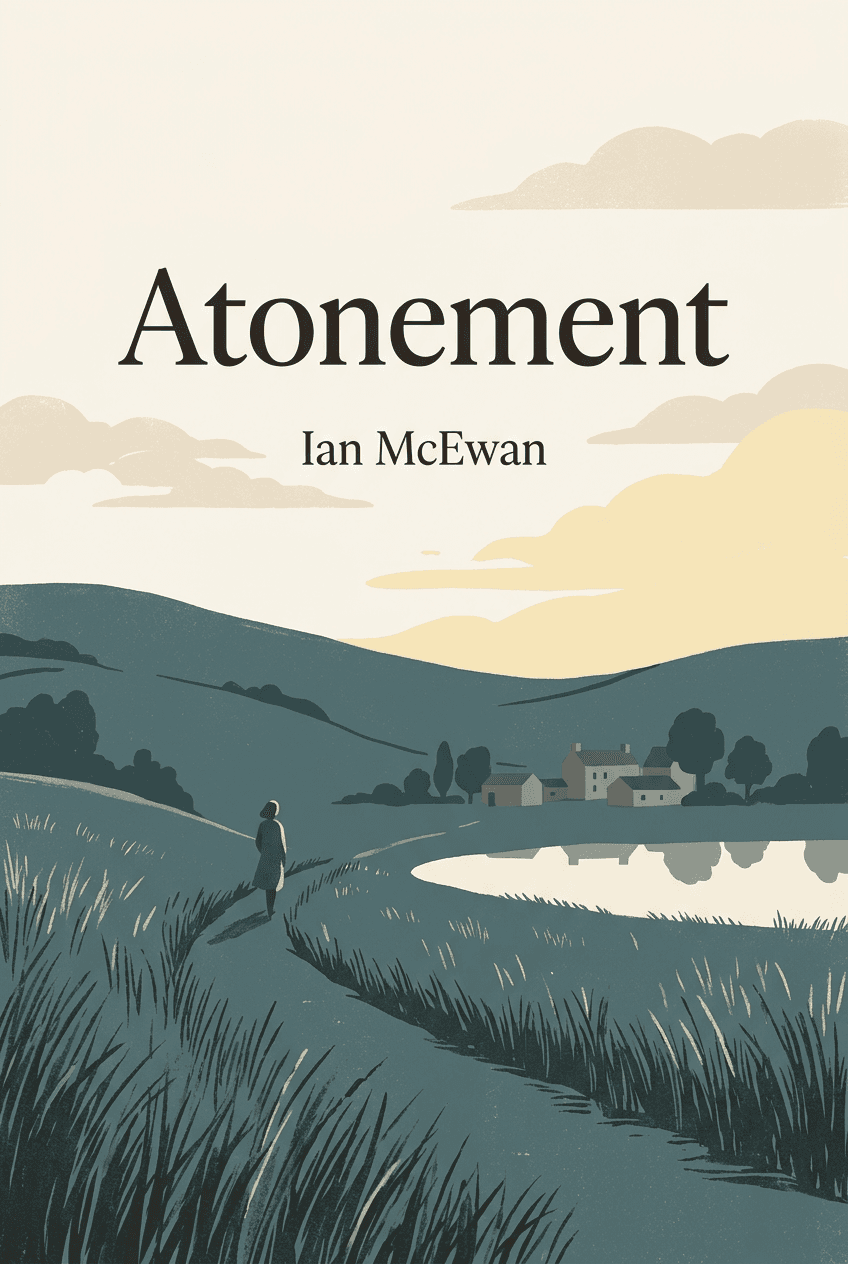
Ian McEwan · 2001 · Literary fiction · Historical · Metafiction
Atonement
A long, hot day in 1935, a child's terrible certainty, and a lifetime spent trying to atone.
14 guided chapters · ~12 hours of reading
What it’s really about
On its surface, Atonement is the story of a crime and an accusation: one stifling summer day in which a thirteen-year-old girl, sure she understands what she has seen, sets in motion a tragedy that reaches across decades. Underneath, it is about the imagination itself, its power to create and to destroy, and about guilt that cannot be outrun. McEwan writes about how we misread one another, how class and certainty bend the truth, and how a whole life can be shaped by a single irreversible mistake. It is precise, suspenseful, and finally devastating.
- Guilt & atonement
- Imagination & storytelling
- Class & privilege
- Memory & truth
- War & its cost
From the Foreword
Before page one, a short orientation: the world, the writer, and how to read this particular book. Cross the threshold when you are ready.
- The world you're entering
- The author's moment
- Themes to carry
- How to read this one
Who it’s for
For readers who love a slow-burning, beautifully written drama with a long reach: anyone drawn to literary fiction about guilt, family, and memory, to wartime stories, or to writers like Kazuo Ishiguro and Sebastian Faulks. If you want a novel that is both a page-turner and a meditation on fiction itself, this one is for you.