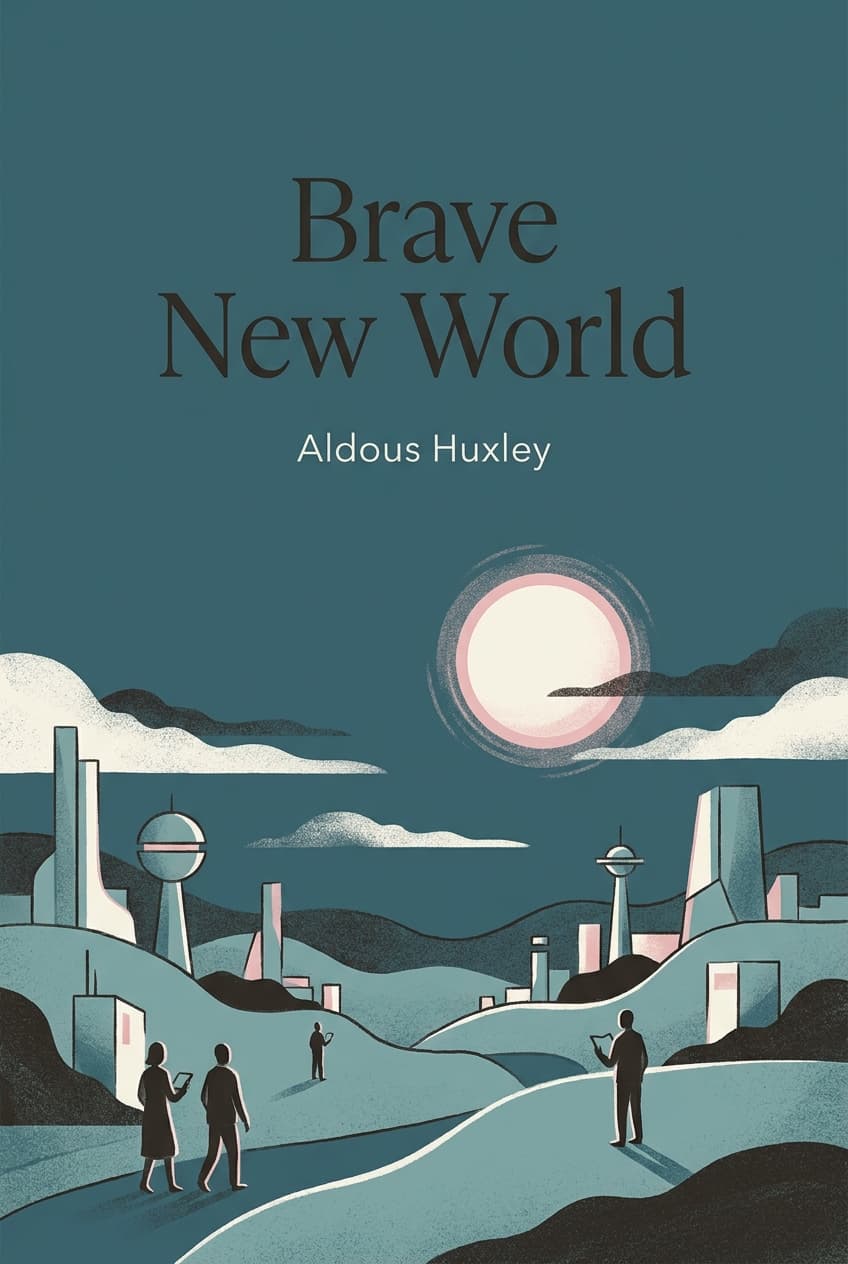
Aldous Huxley · 1932 · Dystopian satire · Science fiction
Brave New World
The great dystopia of pleasure: a world where everyone is happy, and a novel that asks what it took to make them so.
13 guided chapters · ~10 hours of reading
What it’s really about
On its surface, Brave New World is a tour of a perfectly engineered society: babies grown to order in hatcheries, a caste system fixed before birth, sleep-taught slogans, casual sex, synthetic entertainment, and a drug that dissolves every bad mood. Underneath, it is an argument about happiness, and whether a life with no pain, no longing and no solitude is still a human life. Huxley follows a handful of people who fit this world imperfectly and lets their discomfort test it. It is funny, chilling, and somehow more relevant with every decade.
- Happiness vs. freedom
- Conditioning & control
- Pleasure as power
- Science, art & religion
- Solitude & the self
From the Foreword
Before page one, a short orientation: the world, the writer, and how to read this particular book. Cross the threshold when you are ready.
- The world you're entering
- The author's moment
- Themes to carry
- How to read this one
Who it’s for
For readers who loved 1984, Fahrenheit 451 or The Handmaid's Tale and want the dystopia that runs on pleasure instead of fear; anyone curious about where technology, consumerism and contentment might lead; and lovers of satire with teeth. It is short, sharp and often very funny, and it will start more arguments than it settles.