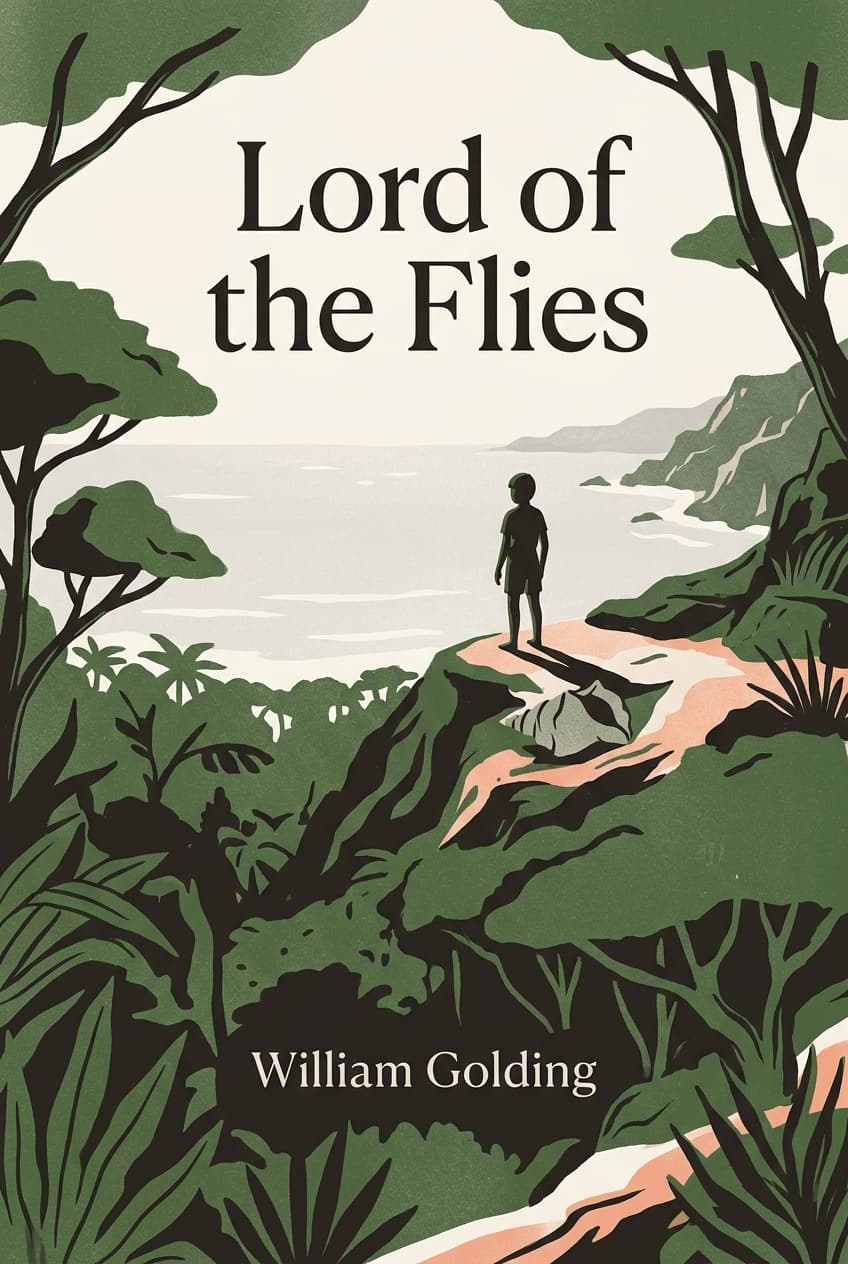
William Golding · 1954 · Allegorical novel · Survival
Lord of the Flies
A coral island, a band of schoolboys with no adults, and the question of what holds people together when nobody is watching.
12 guided chapters · ~7 hours of reading
What it’s really about
On its surface, Lord of the Flies is a survival story: a group of British schoolboys stranded on an island try to govern themselves, keep a signal fire burning, and wait to be rescued. Underneath, it is a fable about where cruelty comes from, and about how thin the layer of rules and habits is that keeps it in check. Golding was answering the cheerful island adventures he had grown up with, in which English boys behave splendidly, by asking what children would really do. It is a book about fear, power, and the stories people tell to make their worst impulses feel necessary.
- Civilization & savagery
- Fear & the beast
- Power & leadership
- Loss of innocence
- Reason & instinct
From the Foreword
Before page one, a short orientation: the island, the man who imagined it, and how to read a story that is also a fable. Cross the threshold when you are ready.
- The world you're entering
- The author's moment
- Themes to carry
- How to read this one
Who it’s for
For readers who want a story that grips like an adventure and lingers like a parable; anyone interested in power, group behavior, and moral psychology; and fans of tightly built classics such as Animal Farm, 1984, or The Road. If you want a short book that leaves you with large questions, this is one of the best.