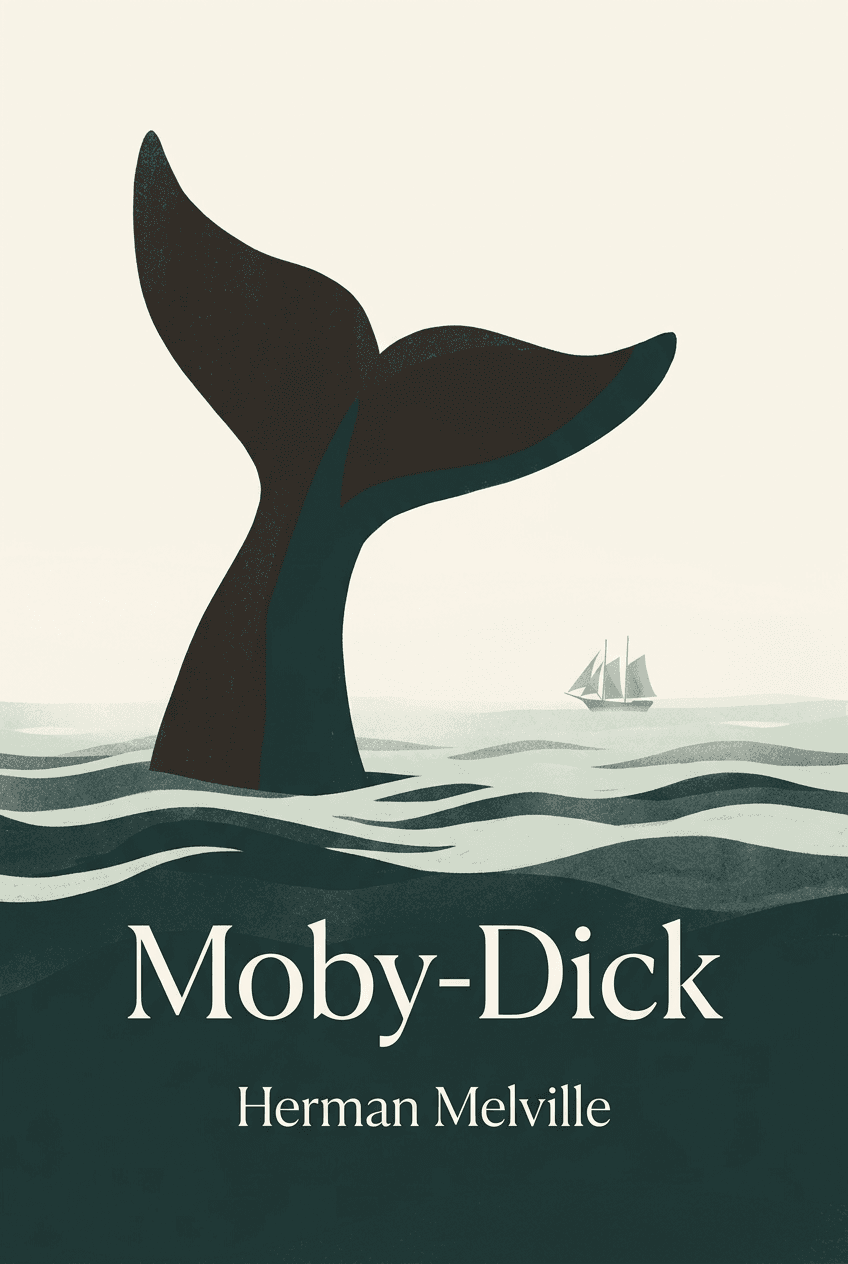
Herman Melville · 1851
Moby-Dick
A Nantucket whaling voyage becomes one captain's doomed hunt for a single white whale, in the strange and magnificent epic of American literature.
14 guided chapters
What it’s really about
On its surface, Moby-Dick is a sea adventure: a young sailor ships out on a whaler and learns the brutal, fascinating trade of hunting whales. Underneath, it is one of literature's deepest meditations on obsession. The ship's captain carries a private wound and a private fury, and he bends the whole voyage toward a creature that has come to mean far more to him than any animal should. Around that hunt Melville builds a vast, restless book about nature, God, fate, race, friendship, and the limits of what a person can know. It is funny, frightening, philosophical, and unlike anything else.
- Obsession & revenge
- Fate & free will
- The unknowable
- The sea & the soul
- Friendship across difference
From the Foreword
Before page one, a short orientation: the world, the writer, and how to read this particular book. It is a big, strange, magnificent ship of a novel. Step aboard when you are ready.
- The world you're entering
- The author's moment
- Themes to carry
- How to read this one
Who it’s for
For readers who want to climb a real mountain of a book, and for anyone drawn to the sea, to big philosophical questions, or to richly strange prose. If you have loved sprawling, ambitious works that mix story with ideas, or writers from Hawthorne to Cormac McCarthy, this is the source many of them drank from.