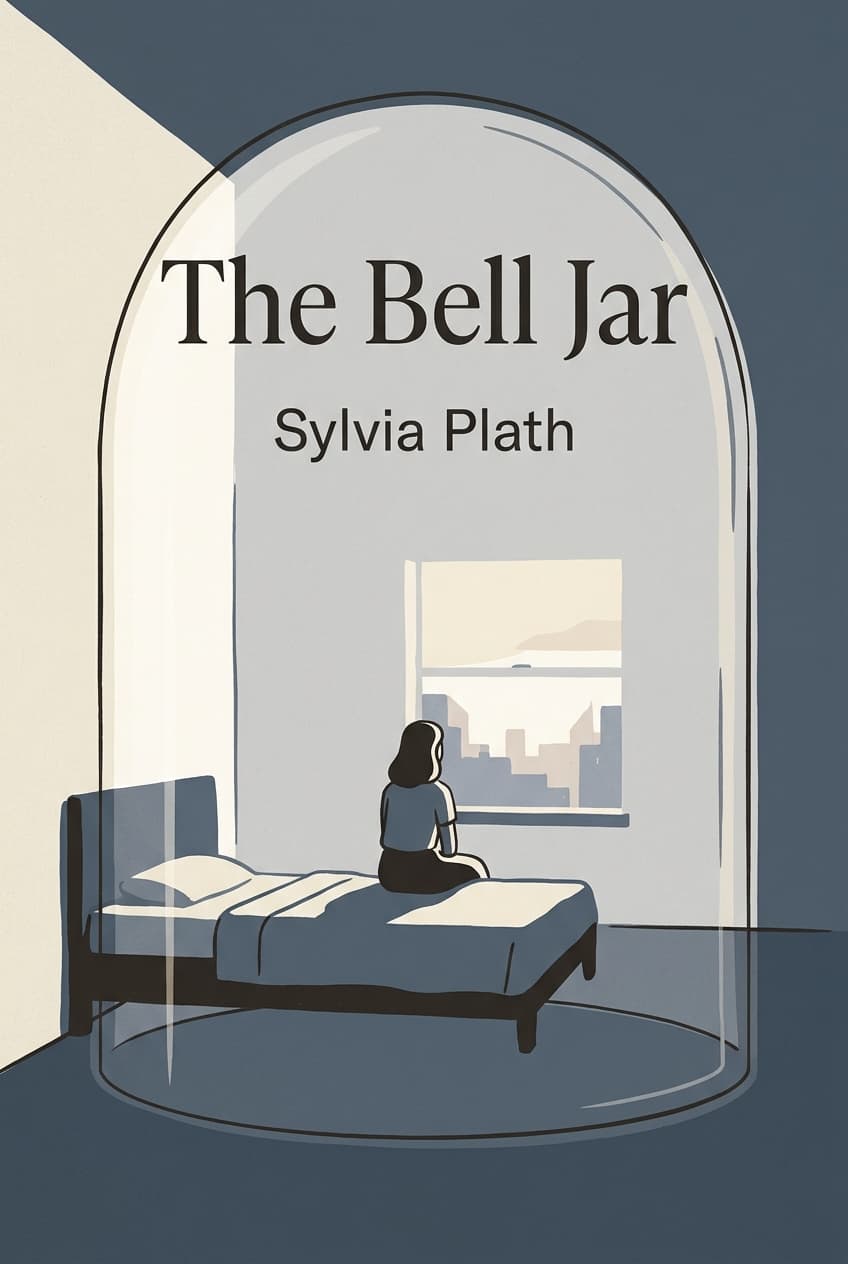
Sylvia Plath · 1963 · Psychological · Coming-of-age
The Bell Jar
A sharp, funny, devastating novel of a young woman's breakdown and slow return, told in one of the most honest voices in American fiction.
13 guided chapters · ~8 hours of reading
What it’s really about
Esther Greenwood has done everything right. She has the scholarships, the prizes, and a month in New York at a glossy magazine that is supposed to be the start of everything. But the city leaves her numb, the futures on offer all seem to cancel each other out, and when she goes home the numbness thickens into something she cannot name. The Bell Jar follows her down and, with great care, part of the way back up. It is a novel about depression written from the inside, about the impossible choices offered to bright young women in the 1950s, and about the stubborn, unglamorous work of recovery. It is also, unexpectedly, very funny.
- Depression from the inside
- Womanhood and impossible choices
- Identity and doubles
- The body: birth, blood, bathwater
- Recovery and its fragility
From the Foreword
Before page one, a short orientation: the world, the writer, and how to read this particular book. Cross the threshold when you are ready.
- The world you're entering
- The author's moment
- Themes to carry
- How to read this one
Who it’s for
For readers who loved The Catcher in the Rye and want its sister novel; for anyone drawn to sharp first-person voices, coming-of-age stories, and fiction about mental illness told with honesty rather than melodrama. If you have ever felt that every path forward cancelled the others, this book was written for you. Be aware that it depicts depression and suicide with candor.