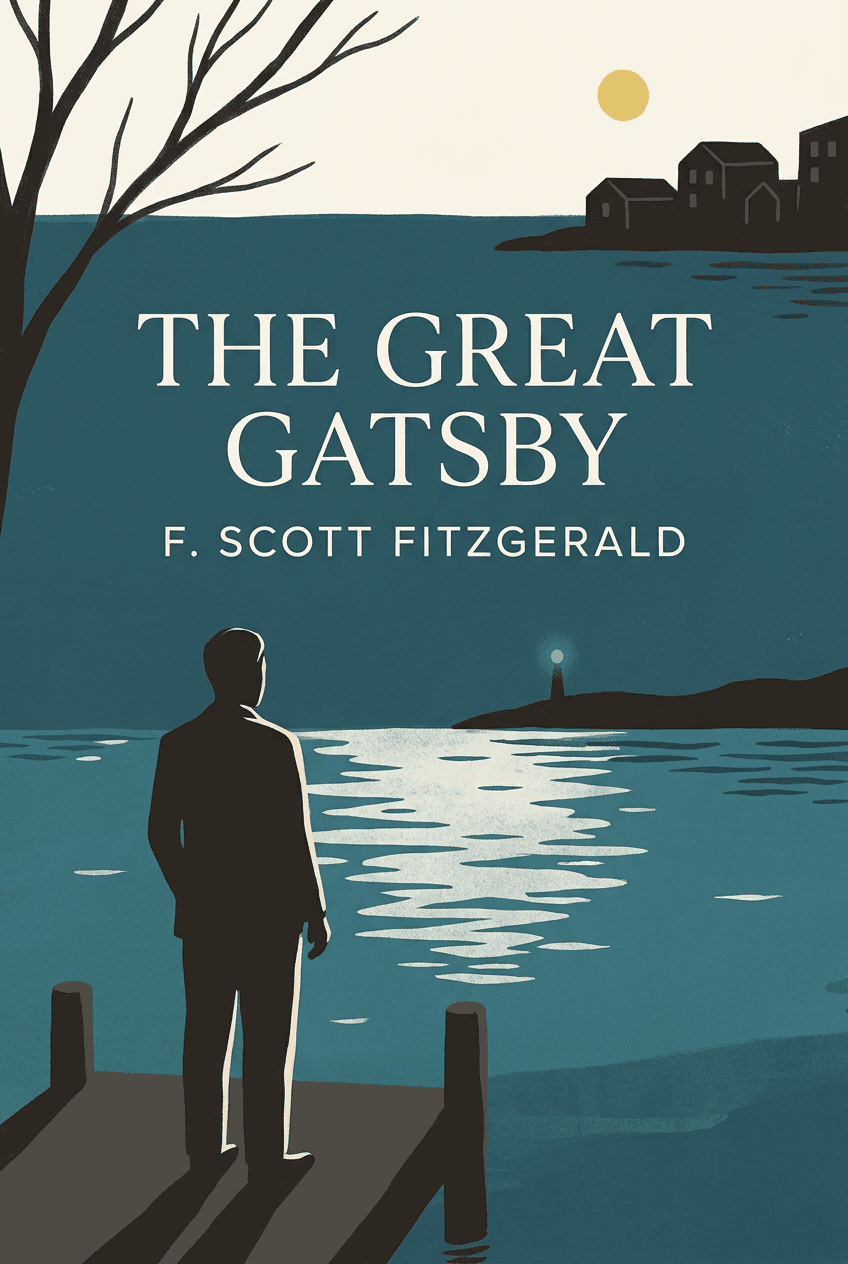
F. Scott Fitzgerald · 1925 · Literary fiction
The Great Gatsby
A short, luminous American tragedy of longing, wealth, and a green light across the water, set in the Jazz Age summer of 1922.
9 guided chapters · ~6 hours of reading
What it’s really about
On its surface, The Great Gatsby is the story of one feverish summer told by Nick Carraway, a young Midwesterner who rents a small house beside a mansion famous for its parties. His neighbor is a charming, secretive millionaire whose origins no one can pin down and whose whole glittering life seems pointed at something just out of reach. Underneath the glamour, it is a book about the American Dream and its cost: the belief that you can invent yourself, buy your way upward, and reclaim a lost past, set against a society that will take your money and never quite let you in. It is brief, lyrical, and unsparing, a love story wrapped around a quiet act of moral accounting.
- The American Dream
- Old money vs. new money
- Longing & the past
- Wealth & corruption
- Carelessness & class
From the Foreword
Before page one, a short orientation: the world, the writer, and how to read this particular book. Cross the threshold when you are ready.
- The world you're entering
- The author's moment
- Themes to carry
- How to read this one
Who it’s for
For readers who love beautiful sentences and a story that rewards a second read. Anyone drawn to the glamour and disillusion of the 1920s, to tragic romance, or to sharp social observation in the vein of Edith Wharton. At under two hundred pages it is also a perfect short classic if you want maximum resonance for minimum length.