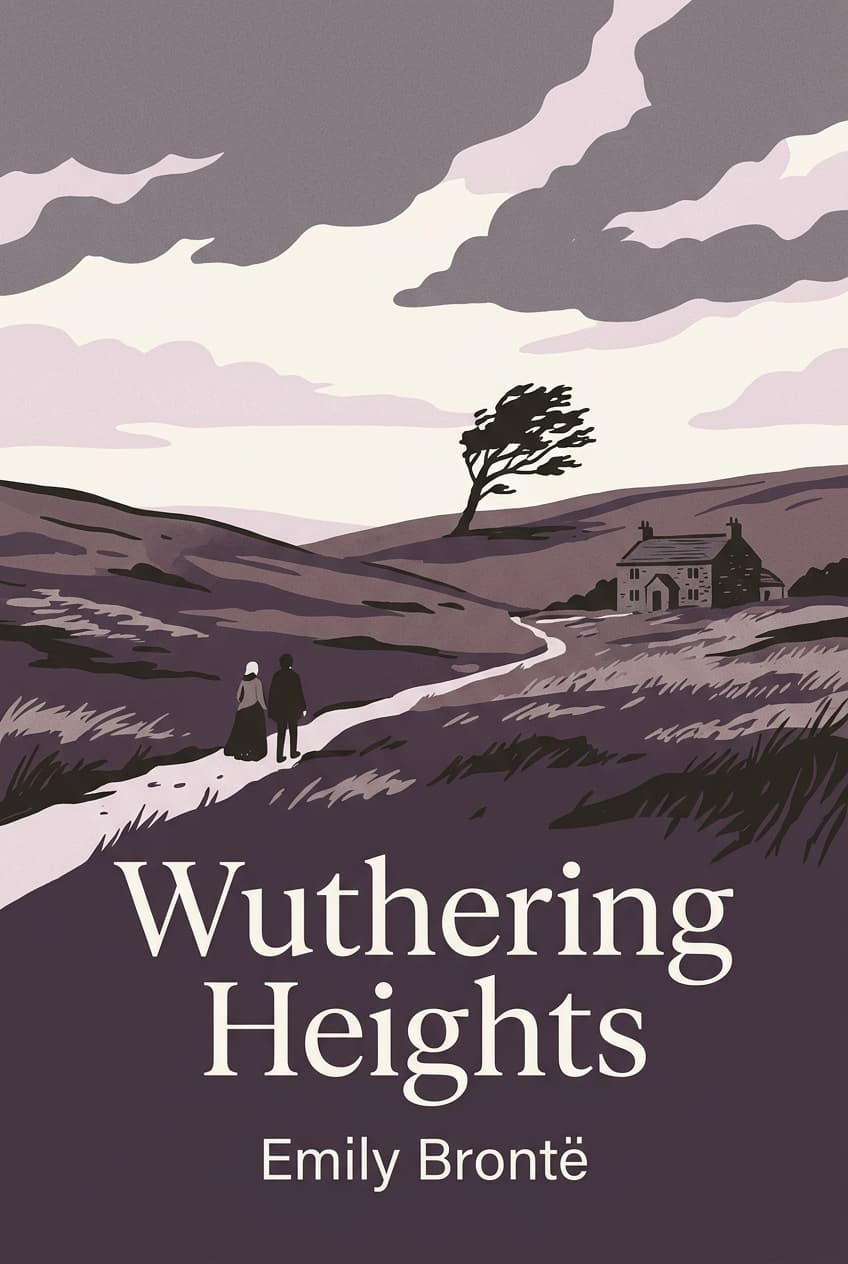
Emily Brontë · 1847 · Gothic novel · Romance · Tragedy
Wuthering Heights
A foundling, a wild girl, two houses on the moor, and a love that refuses to stay buried.
16 guided chapters · ~14 hours of reading
What it’s really about
On its surface, Wuthering Heights is the story of two families, the Earnshaws of the Heights and the Lintons of the Grange, told to a newcomer by the housekeeper who served them both. At its centre are Heathcliff, a dark foundling brought into the Earnshaw house as a child, and Catherine Earnshaw, the daughter of that house, whose bond with him is fiercer than love and stranger than friendship. Underneath, it is a novel about passion and possession, cruelty handed down like property, and a landscape that seems to shape the people who live on it. It is wild, violent, and very tightly built, and it still divides readers into those who find it a great love story and those who find it a terrifying one.
- Passion & identity
- Revenge
- Class & inheritance
- Nature & civilisation
- The past that haunts
From the Foreword
Before page one, a short orientation: the moor, the writer, and how to read this particular book. Cross the threshold when you are ready.
- The world you're entering
- The author's moment
- Themes to carry
- How to read this one
Who it’s for
For readers who love Jane Eyre, Rebecca, or Frankenstein, anyone drawn to the Gothic, to stories of obsession and revenge, or to landscapes that feel alive. If you want a gentle romance, look elsewhere. If you want a book that still unsettles readers after nearly two centuries, climb the hill.